

AER - Arabian Equipment Rental
26 Aug 2026
A Practical Checklist for Monitoring Pumps, Groundwater Levels, Discharge Systems and Site Safety
Dewatering is an essential part of many construction and infrastructure projects, helping contractors control groundwater, maintain dry excavation areas, and support safe working conditions. However, keeping a dewatering system operating effectively requires regular inspections, accurate documentation, and prompt action when problems arise.
A daily dewatering inspection report provides a structured record of equipment performance, groundwater conditions, discharge arrangements, and maintenance activities. It helps site teams identify potential issues early, maintain operational consistency, and document dewatering activities throughout the project.
For contractors working on construction sites across the UAE, a well-prepared inspection report can support better coordination, reduce avoidable downtime, and improve project documentation. Arabian Equipment Rental LLC (AER) recognises the importance of reliable pumping equipment and effective monitoring practices in demanding dewatering operations.
1. Project and Inspection Details
Every daily dewatering inspection report should begin with basic project information. These details establish when and where the inspection took place and identify the personnel responsible for checking the system.
The report should include:
Project name and location.
Client and main contractor details, where applicable.
Inspection date and time.
Weather conditions at the time of inspection.
Name and designation of the inspector.
Relevant work area, excavation zone, or dewatering system identification.
Names of responsible site personnel, where required.
Accurate identification makes it easier to track inspection records, investigate recurring issues, and compare operating conditions across different days.
2. Dewatering Pump and Equipment Status
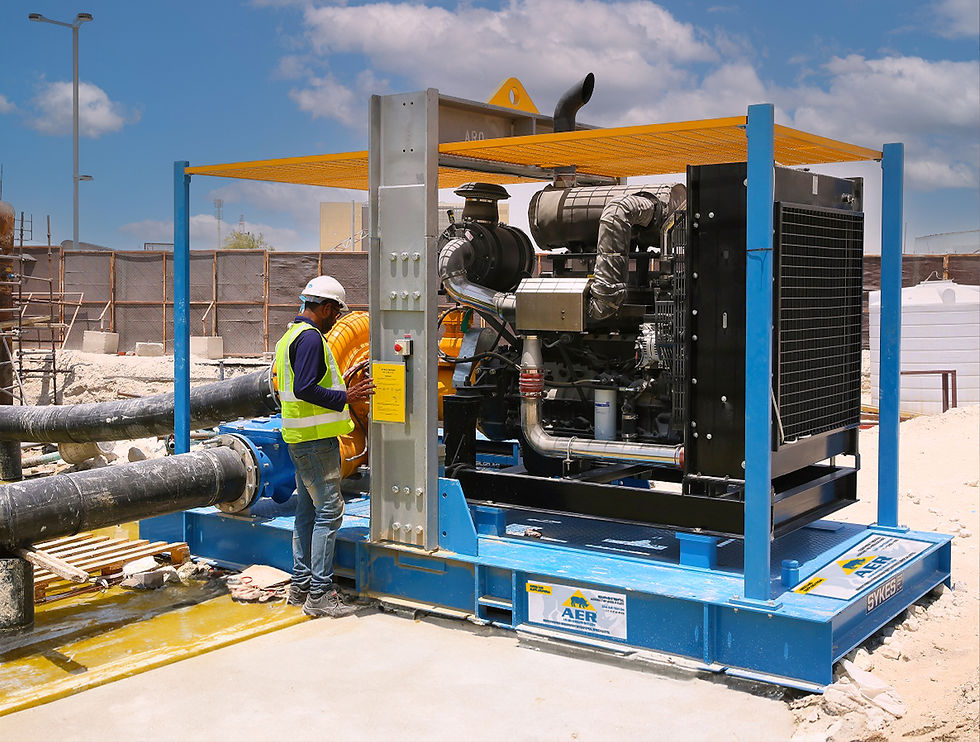
The condition and performance of pumping equipment should be a central part of the inspection report. Pumps may operate continuously or for extended periods, making regular checks important for identifying signs of wear, damage, or operational abnormalities.
The inspector should record:
Pump identification number or equipment reference.
Pump type and capacity, where relevant.
Operating status, including running, standby, or out of service.
Operating hours or hour-meter reading.
Visible leaks, unusual noise, vibration, or overheating.
Condition of accessible electrical connections, cables, and control panels.
Fuel level for diesel-driven pumps, where applicable.
Condition of hoses, couplings, and accessible connections.
General equipment condition and any visible damage.
Any abnormal condition should be recorded clearly, along with the action taken and the person responsible for follow-up. Electrical inspections and other technical checks should be performed only by appropriately qualified personnel.
3. Groundwater Levels and Excavation Conditions
Monitoring groundwater levels is one of the most important aspects of a daily dewatering inspection. The report should show whether groundwater is being controlled in accordance with the project's requirements.
Relevant information may include:
Groundwater level readings at designated monitoring points.
Time and location of each reading.
Target groundwater level or project control limit.
Comparison with previous readings.
Evidence of water accumulation within excavations.
Seepage through excavation walls or the surrounding ground.
Changes in soil stability or visible ground settlement.
Any unexpected increase in groundwater inflow.
Groundwater readings should be taken using the project's approved monitoring procedures. If levels rise above specified limits, the site team should investigate the cause and implement the required corrective measures.
Early identification of changing groundwater conditions can help contractors respond before water ingress affects excavation activities or creates additional construction risks.
4. Pumping Performance and Flow Measurements
A pump may be running without delivering the required flow. Therefore, the report should document actual operating performance wherever measurements are available.
Useful parameters include:
Discharge flow rate.
Suction and discharge pressure, where applicable.
Pump operating hours.
Water level at the suction point, where relevant.
Changes in flow compared with previous inspections.
Evidence of restricted suction, blocked strainers, or air ingress.
Unexpected fluctuations in pressure or discharge volume.
Readings should be compared with the pump's expected operating range and the project's specified requirements.
If discharge flow has dropped, possible causes may include a blocked intake, damaged impeller, air entering the system, a restricted discharge line, or changing groundwater conditions. The report should document the observed symptoms rather than assume a cause before it has been investigated.
5. Discharge Pipeline and Water Disposal Arrangements
The discharge system is just as important as the pump itself. A damaged hose, leaking coupling, blocked pipeline, or unsuitable discharge location can compromise the overall dewatering operation.
Daily inspection records should cover:
Condition of discharge pipes and flexible hoses.
Security of couplings, joints, and connections.
Visible leaks or damaged pipe sections.
Pipe routing and support arrangements.
Signs of blockage or restricted discharge.
Condition of valves and accessible fittings.
Stability and suitability of the discharge point.
Evidence of erosion, flooding, or water accumulation near the outlet.
Compliance with approved discharge arrangements and applicable site requirements.
Water should be discharged only to approved locations and in accordance with relevant environmental and project requirements. Any signs of uncontrolled discharge, erosion, or flooding should be reported and addressed promptly.
6. Electrical Supply, Fuel, and Backup Systems
Reliable power and fuel supplies are essential for maintaining dewatering operations, particularly when pumps need to run continuously.
The daily report should include relevant checks for the installed system, such as:
Electrical supply status or generator condition.
Fuel level and estimated operating availability for diesel pumps.
Visible condition of power cables and connections.
Condition of accessible control panels and alarms.
Availability of standby pumps, where required.
Readiness of backup power arrangements.
Status of automatic changeover or alarm systems, where installed.
Any power interruptions or equipment shutdowns during the reporting period.
Backup arrangements should reflect the project's risk assessment and dewatering requirements. Where groundwater inflow could threaten excavation safety or damage completed work, standby equipment and contingency procedures should be clearly established.
7. Safety and Environmental Observations
A daily dewatering inspection report should document relevant safety and environmental conditions around the pumping installation.
Inspectors should look for:
Safe access around pumps and associated equipment.
Properly managed hoses, cables, and trip hazards.
Suitable barriers and warning signs, where required.
Visible fuel or oil leaks.
Uncontrolled water discharge.
Erosion or ground instability around discharge routes.
Potential contamination of surrounding areas.
Safe access to monitoring points and pump installations.
Any incidents, near misses, or unsafe conditions.
The report should identify hazards that require immediate attention and record the corrective actions taken. Conditions presenting an immediate danger should be escalated without waiting for the daily report to be completed.
8. Maintenance, Repairs, and Corrective Actions
Inspection records become more useful when they explain what happened after a problem was identified.
The report should contain a clear record of:
Faults or defects identified.
Maintenance activities completed.
Parts replaced or repairs carried out.
Equipment taken out of service.
Temporary measures implemented.
Outstanding maintenance requirements.
The person or team responsible for follow-up.
Target completion dates for unresolved issues.
Confirmation that completed corrective actions have been checked.
For example, if an inspection identifies reduced discharge flow, the report could record the measured flow, the affected pump, the investigation carried out, the corrective action, and the subsequent operating result.
This creates a traceable maintenance history and helps site teams identify repeated equipment or system problems.
9. Downtime and Operational Changes
Any interruption to dewatering operations should be documented, particularly where continuous groundwater control is required.
Record the following information, where applicable:
Start and end times of the interruption.
Duration of downtime.
Affected pump or system.
Reported or confirmed cause.
Impact on groundwater levels or excavation conditions.
Temporary pumping arrangements.
Corrective actions and equipment restart time.
Any notification or escalation to the site management team.
Recording downtime helps contractors understand equipment reliability, investigate recurring failures, and plan maintenance or standby arrangements more effectively.
10. Photographs, Sign-Off, and Reporting
Photographs can provide useful supporting evidence, particularly when documenting leaks, damaged equipment, changing groundwater conditions, or completed repairs.
A complete report should include:
Photographs of relevant defects or site conditions.
Readings from approved monitoring instruments, where appropriate.
Supporting maintenance or service records, if required.
Inspector's name and signature or electronic approval.
Review by the designated site representative, where required.
Outstanding actions and handover notes for the next shift.
Reports should be completed promptly, with measurements recorded using consistent units and monitoring locations. Missing readings should be identified rather than replaced with estimates.
Daily Dewatering Inspection Report Checklist
The following checklist provides a practical overview of the information site teams may need to record each day.
Inspection item | Information to record |
Project details | Project name, date, time, location, and inspector |
Pump condition | Equipment ID, operating status, and visible defects |
Operating performance | Flow rate, pressure readings, and operating hours |
Groundwater monitoring | Water levels, target limits, and changes from previous readings |
Discharge system | Pipe condition, connections, leaks, and discharge point |
Power and fuel | Supply status, fuel level, and backup readiness |
Safety and environment | Hazards, spills, erosion, and discharge concerns |
Maintenance | Faults, repairs, and outstanding actions |
Downtime | Duration, cause, operational impact, and restart time |
Documentation | Photographs, sign-off, and handover notes |
The checklist should be adapted to the project's approved inspection procedure, equipment configuration, environmental conditions, and contractual requirements. Not every parameter will apply to every dewatering installation.
Common Mistakes to Avoid in Daily Dewatering Reports
Even when inspections take place regularly, incomplete reporting can make it difficult to identify problems or demonstrate that the system is being managed effectively.
Common mistakes include:
Recording that a pump is running without checking whether it is delivering the expected flow.
Failing to document groundwater readings consistently.
Omitting the time and location of measurements.
Reporting a defect without identifying who will address it.
Failing to record equipment downtime or temporary changes to the system.
Ignoring discharge leaks, erosion, or environmental concerns.
Leaving unresolved issues out of the next shift's handover.
Using inconsistent measurement units or undocumented estimates.
A structured report, combined with clear responsibilities and timely escalation, helps prevent these issues from undermining the effectiveness of site monitoring.
How AER Supports Dewatering Operations in the UAE
Successful dewatering depends on selecting appropriate pumping equipment, planning the discharge arrangement, and monitoring performance throughout the project. Daily inspections help contractors confirm that equipment remains suitable for operating conditions and that emerging issues are identified quickly.
Arabian Equipment Rental LLC (AER) provides equipment rental solutions for construction, infrastructure, and industrial applications. Projects involving basement excavation, pipeline installation, utility trenches, and groundwater control can benefit from appropriate pump selection, well-planned discharge arrangements, and effective operational monitoring.
By combining suitable equipment with consistent inspection and maintenance practices, contractors can improve operational reliability and better manage the challenges associated with groundwater control.
Conclusion
A daily dewatering inspection report should provide a clear record of equipment condition, pumping performance, groundwater levels, discharge arrangements, safety observations, maintenance activities, and outstanding corrective actions.
Accurate reporting helps site teams identify changes early, investigate equipment problems, maintain communication between shifts, and support compliance with project-specific requirements. Most importantly, it ensures that dewatering performance is assessed through documented observations and measurements rather than assumptions.
For contractors undertaking dewatering and construction projects across the UAE, a consistent inspection process is an important part of maintaining reliable pumping operations.
Looking for pumping equipment for your next project? Contact Arabian Equipment Rental LLC (AER) to discuss your dewatering requirements and identify a suitable equipment rental solution.

OR, IF YOU PREFER, SEND US A MESSAGE HERE
AND ONE OF OUR EXPERT TEAM WILL GET BACK TO YOU SHORTLY.

Arabian Equipment Rental (AER)
HEAD OFFICE
Office 232
2nd Floor, Zone-2
Central Plaza Building
Schon Business Park
Dubai Investment Park 1
Dubai • United Arab Emirates


